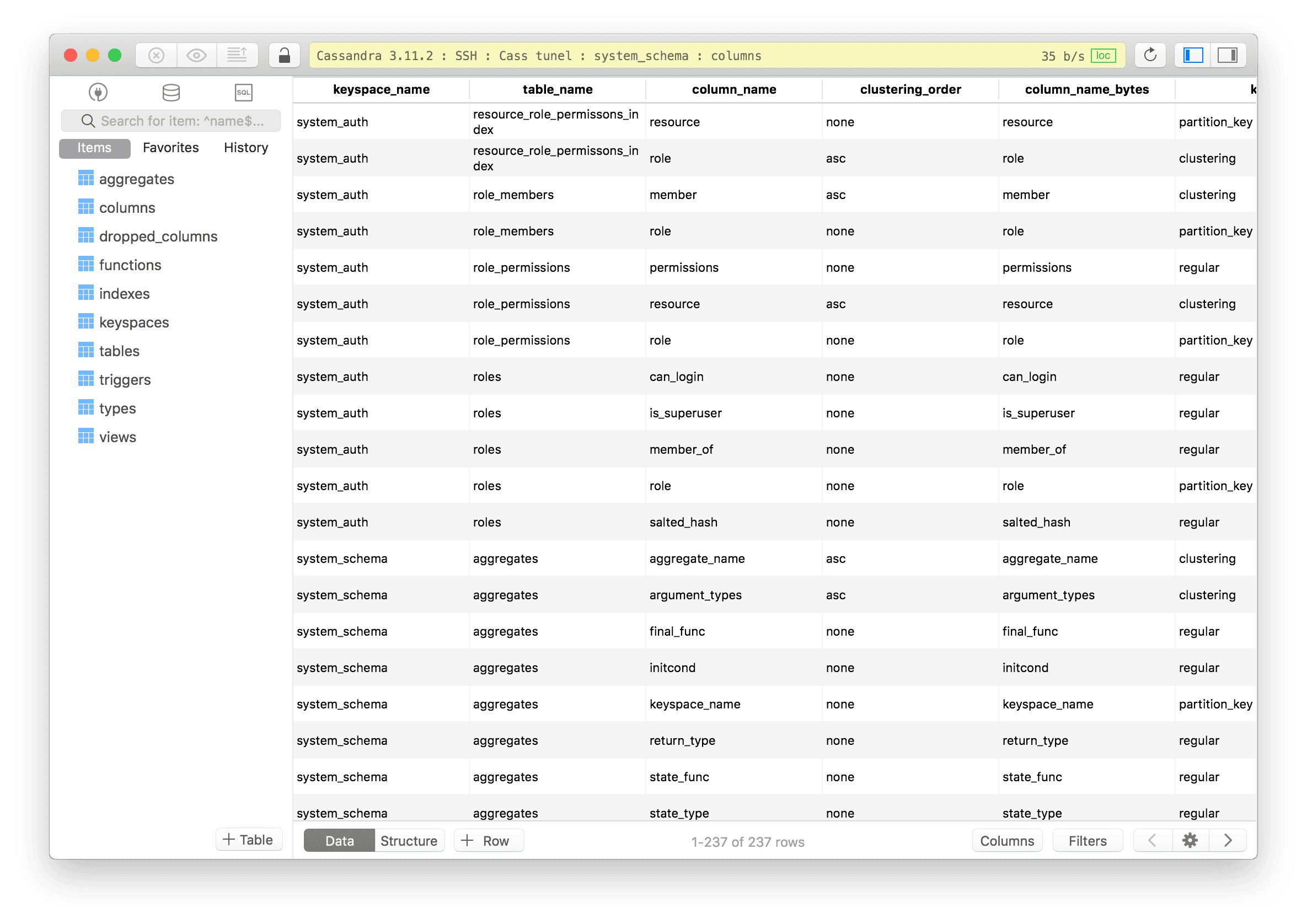
TablePlus provides a free, native GUI client with query tool to manage Cassandra database on Mac, including database browser, SQL editor, table editor, and some other custom Cassandra GUI tools.
First, what is NoSQL?
NoSQL is a term implying any data storage technology that is not relational in nature.
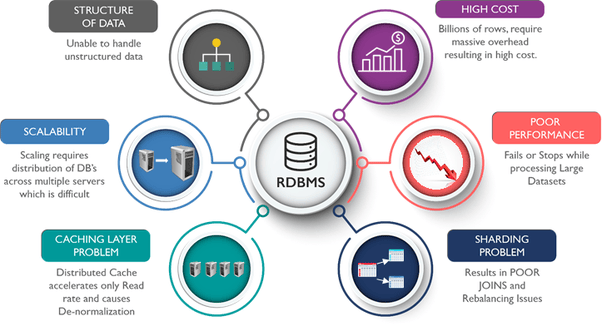
Relational databases need schemas to be defined before adding data. But if the database is large, it gets a little slower and more downtime. NoSQL databases solve this by allowing inserting data without a predefined schema thus making it easy to modify the database in real-time.
Popular types of NoSQL Database:
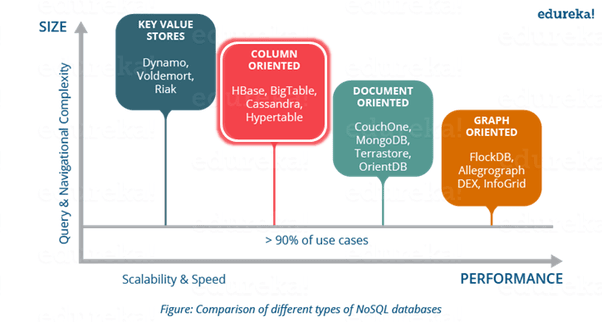
- Document databases
- Graph Stores
- Key-value stores
- Wide-column stores
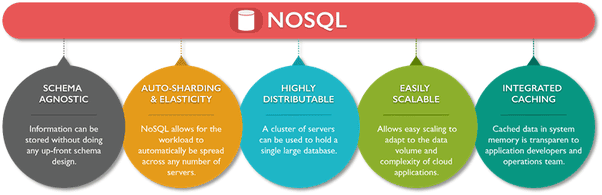
The advantages of NoSQL
Types of NoSQL database
What is Cassandra Database?
Apache Cassandra (Cassandra DB) is a free and open-source distributed wide column store NoSQL database management system designed to handle large amounts of data across many commodity servers, providing high availability with no single point of failure. Cassandra was originally developed at Facebook, was open sourced in 2008, and became a top-level Apache project in 2010.
Key Features and Benefits of Cassandra Database
- Massively scalable architecture. All nodes have the same role, so you can expand the cluster without managing a separate master.
- Active everywhere design. Every node can accept reads and writes.
- Linear scale performance. You can add nodes while the cluster is running and get predictable gains in performance.
- Continuous availability. The cluster replicates both data and node functions to avoid a single point of failure.
- Transparent fault detection and recovery. You can restore or replace a failed node.
- Flexible and dynamic data model. Cassandra supports modern data types and fast reads and writes.
- Strong data protection. A commit log helps prevent data loss. Built-in security, backups, and restores help protect your data.
- Tunable data consistency. You can choose strong or eventual consistency across a distributed cluster.
- Multi-datacenter replication. You can read and write across data centers in different regions and across cloud availability zones.
- Data compression. Compression can reduce data size by up to 80% without a performance penalty.
The biggest advantage of using Cassandra is that you can achieve super fast writes and reads in a distributed highly available ecosphere, and in extremely large scale projects. It's not designed to update or delete data, so the best use case for Cassandra is to write time-based log activities, sensor data, error logging, etc. It's widely used in the field of IOT as it can offer real-time insights with minimum time required.
Looking for a good Cassandra GUI client? TablePlus can be it!
TablePlus provides a GUI tool for you to manage Cassandra effectively. It's native, beautiful, and free.
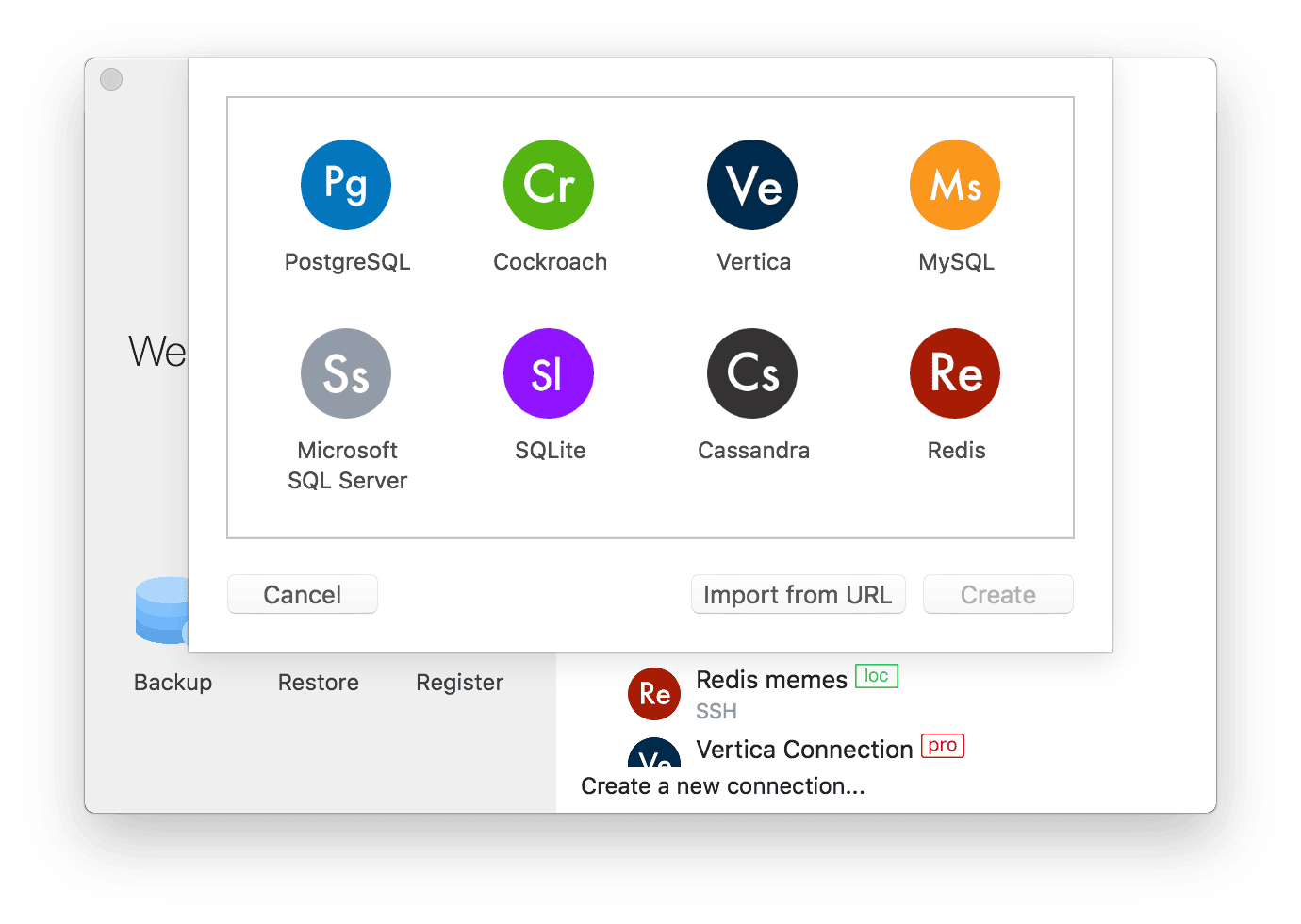
Table Editor
Start using TablePlus now: Download TablePlus